Laws, Hints and Tips
Portugal is the smaller neighbour to Spain, and
shares a similar history and culture, although Portuguese is a distinct language.
Portugal, like other Mediterranean countries, can get very hot in
summer, so ensure you have sufficient coolant, and that your radiator
fan is fully working, especially if towing.
While much of the main road network is modern and
has good signs, many of the towns can be confusing for first time
visitors, and some roads will have two different names. Smaller side
roads, and older roads can be in poor condition with potholes and
crumbling verges.
There is a wide mix of vehicles on the roads in
Portugal, from modern cars (generally) exceeding the posted speed
limits to horse (or donkey!) drawn carts and scooters that appear to
be several vehicles bolted together. The variety of traffic,
combined with low visibility on winding roads means you may come up
behind another vehicle very suddenly.
Basic Legal Requirements
Driving Licence
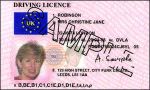 When driving in Portugal, you will need to ensure you bring both parts of your
driving licence - the Photocard plus the Paper Counterpart
(D740). If you do not have a Photocard yet, only the paper copy is
required, but you will need Photo ID, such as a Passport
When driving in Portugal, you will need to ensure you bring both parts of your
driving licence - the Photocard plus the Paper Counterpart
(D740). If you do not have a Photocard yet, only the paper copy is
required, but you will need Photo ID, such as a Passport
You must be the holder
of a full driving licence (not a provisional), and have passed your
test. The Portuguese law states you must be at least 17 years, but
some young drivers have reported problems with the authorities for
those under 18
The International
Driving Permit is not required, but if you would like one you can
apply through the Post Office. The international driving permit is in
addition to your driving licence, so you will need to carry both
copies.
While a photocopy may
be useful if your licence is lost, you should carry the original with
you. It is recommended that you also carry your passport for proof
of identification - you must have at least one photographic ID.
Car Documents
You should carry your
vehicles Registration Certificate (V5C) with you, which should be
updated to show your correct details. For security reasons, it's best
NOT to leave the Registration Certificate in the vehicle while it is
parked - it makes it harder to a thief to resell the vehicle if
they do not have the documentation.
While a photocopy may
be useful if your Registration Certificate is lost, you should carry
the original with you.
Insurance
It is compulsory to
have at least third- party insurance for Portugal, as for the UK. Most
UK insurance policies will allow an element of European driving,
often for a limited period.
Before leaving the UK,
it is a good idea to contact your insurer, and check what your
existing cover allows. You can also request a 'Green Card' which is
an internationally recognised form of proof of insurance. You should
carry proof of insurance with you while driving.
If your existing
insurance does not provide European cover for the period required,
most insurance brokers will have a suitable policy covering Portugal.
Your Vehicle
 Your headlights will need to be adjusted to ensure that they do not dazzle oncoming users.
Standard halogen
headlights and Autobulbs Xenon
HID Conversion kits can be modified by the use of a stick on
Headlight
Beam Adaptor. Vehicles with factory fitted Xenon HID headlights
may find there is an adjuster either on the headlights themselves or
on the dashboard - check your manual for details. If there is
no adjuster, you may need to visit a dealer for them to make the
adjustments, and again to change them back after your visit.
Reflective
Jackets or vests are compulsory for locals, and strongly
recommended for visitors, and must be worn when getting out of a
vehicle stuck on a motorway, dual carriageway or other busy road.
 You should also carry a
reflective Warning
Triangle in the vehicle - they are not compulsory to carry,
but you must use one if you break down. In the event of an accident
or breakdown, the triangle should be set up by the side of the road,
at least 50 meters in the direction of of the traffic. If you have
broken down in the outer lane of a dual carriageway or motorway, or
attempting to place the warning triangle would place you in danger,
do not use it. Remember to collect your warning triangle before
leaving! Warning triangles are not required for motorbikes.
You should also carry a
reflective Warning
Triangle in the vehicle - they are not compulsory to carry,
but you must use one if you break down. In the event of an accident
or breakdown, the triangle should be set up by the side of the road,
at least 50 meters in the direction of of the traffic. If you have
broken down in the outer lane of a dual carriageway or motorway, or
attempting to place the warning triangle would place you in danger,
do not use it. Remember to collect your warning triangle before
leaving! Warning triangles are not required for motorbikes.
If you are planning on
driving in mountain areas in winter, you must carry snow chains and
fit them when conditions demand it. Spiked tyres are not allowed.
Vehicles must NOT be
carried on the back of cars - use a roof rack cycle system
instead.
Children under the age
of 12 must not travel in the front seats, and should use use child
seats, booster seats or seatbelt adaptations suitable for their size
in the rear seats. All passengers must use seat belts if fitted.
 You may have a number
plate that already has a valid 'GB' mark. If you do not, you will
need to apply a GB sticker to the back of your vehicle.
You may have a number
plate that already has a valid 'GB' mark. If you do not, you will
need to apply a GB sticker to the back of your vehicle.
There is no legal
requirement to carry a first
aid kit or a fire
extinguisher in the vehicle, but they are
generally a useful safety item to carry if you have the space.
spare
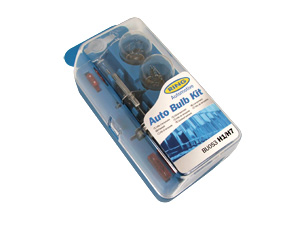
it is recommended (but not required) that you carry a bulb kit suitable for your vehicle, and the tools to change the
bulbs if needed. While HID bulbs last longer than their halogen
counterparts, it makes sense to carry at least one spare Xenon
HID bulb suitable for your headlights.
Driving - Legal Requirements
Lights
Dipped headlights are
required on motorcycles all the time, and on other vehicles when
there is low visibility, such as when it is raining. They are also
required when driving through tunnels - you will see reminder
signs before and after the tunnels. You must not use main beam in
built up areas.
Speed Limits
Speed limits can be
modified by local signs, but the usual ones are:
- Built- up areas: 31
mph or 50 km/h
- Rural roads: 31
mph or 50km/h
- Main Trunk roads:
62 mph or 100 km/h
- Motorways: 75 mph
or 120 km/h
Minimum
speed on motorways is 37 mph or 60 km/h.
Traffic
Priorities
In
general, traffic priorities are the similar to the UK, but reversed
for driving on the right. Where two roads of equal size meet,
traffic from the right has priority unless otherwise shown (normally
by a 'Give Way' line on the road). Roundabouts have the same rules as
the UK, with traffic on the roundabout having priority.
Many
Portuguese drivers will ignore traffic priorities, so be carious if
you see another vehicle waiting to join the carriageway.
Helmets
Helmets
are compulsory at all times for scooters, mopeds and motorcycles.
You will see a lot of people on scooters without helmets, but don't
be tempted to copy them despite the heat.
Overtaking
Overtaking
is only on the left (the outside lane of motorways and dual
carriageways).
Portuguese
drivers will overtake wherever possible, and because of the slow
vehicles on the roads, this will include trucks and buses. If you are
travelling at the speed limit, you may find yourself being overtaken
regularly - a car approaching from behind with it's right
indicator on is planning to pass you. Expect to be overtaken on
bends and blind crests, and possibly to meet traffic in your lane
overtaking from the other direction. It's a good idea to move as far
to your right as possible to give them maximum room.
Especially
in rural areas you will meet a lot of tractors, donkey carts and
other slow moving vehicles, so ensure you are able to pass safely
before beginning an overtake, and that the vehicle behind has not
already started passing you.
Warning with Horn and Lights
At night you should not use the horn except to warn of danger. Portuguese
drivers will also use their horn to let you know they are overtaking,
or pulling out in front of you.
With lights, the official rule is that they should only be used to warn
others of your presence. In practice lights are commonly used to
indicate that the vehicle is coming through or planning to overtake.
If someone flashes you at a junction, if generally indicates they are
NOT going to let you through!
GPS, Speed Cameras and Phones
You
must NOT use any form of radar detector, and other devices for the
avoidance of speed traps are included so this probably rules out the
use of GPS units with speed camera information.
It is an offence to use a hand- held mobile phone in Portugal while
driving.
Alcohol
Drink driving in Portugal is the same as most of mainland Europe. Over 50mg
of alcohol per 100ml of blood will result in a fine and short ban.
Significantly more will result in much larger fines and longer loss
of your licence. Note that this is slightly lower than the 80mg
blood alcohol allowed in the UK, so the safest option is not to drink
at all when you are driving.
Be aware that you may still have alcohol in your blood if you have been
drinking the evening before.
Police and Fines
Police in Portugal can and will issue on the spot fines for a range of offences
including:
-
Not carrying licence, vehicle documents, insurance documents or
Photo ID
-
Lights not working or dazzling other road users
-
Speeding and other motoring offences
-
Not wearing hi- vis reflective jackets when on foot on main roads
-
Not carrying spare bulb kit or a spare tyre
-
Children not in appropriate seats
-
Using a hand held mobile phone while driving
Visitors
driving in Portugal will be expected to pay the fine immediately by
cash or Euro cheque or credit/debit card. If you do not have enough
cash on you, the police may impound your vehicle until you pay.
Police
carry out regular stops to check vehicles and documentation, and do
not need a specific reason to do so. If you do get stopped by the
police, remember to remain polite. If you are abusive you can and
will be arrested on the spot, and may find yourself facing more than
a on- the- spot fine. Ensure you get a receipt for any fines paid.
Driving Tips
-
Drive on the right! It's easy to forget to drive on the right when
changing roads, exiting motorways, going on to roundabouts or
starting for the first time in the morning. Put a sticker on your
dashboard, teach the kids to chant 'drive on the right' every time
you get in the car or even wear one driving glove to remind
yourself.
-
Go round roundabouts ANTI- Clockwise.
-
Portuguese drivers tend to drive either very fast or very slow. You
may well find yourself being overtaken regularly if you stick to the
posted speed limits, and will also find yourself stuck behind slow
moving vehicles.
-
You will be overtaken, and meet people overtaking coming the other
way in hazardous areas. Drive defensively, and be aware there may be
oncoming vehicles around any corner.
- Remember
to reverse the directions you look, especially on roundabouts. Your
instinct when turning left will be to only look to the right, but as
you have to cross both lanes, remember to look both directions. This
is particularly tricky when crossing dual carriageways and joining
roundabouts. Reversing the directions you
check will also help when you are a pedestrian - remember to
look right before stepping off the kerb.
-
Right of way can be tricky, with Portuguese drivers ignoring the
expected priorities. If unsure, assume the other vehicles are going
to carry on. Scooters may ignore stop signs altogether if turning
right, as well as one- way signs and pedestrian areas.
-
Portuguese road maps for towns and cities are not always accurate,
and may show roads that do not always connect the way they appear to.
If using paper maps, a compass may be helpful.
-
Motorway toll roads are not too expensive, and are by far the
fastest and easiest way to get across the country at speed. Many
locals avoid them so they are usually very quiet. Take a ticket
from the gate you enter, and pay at the gate you exit. Cash is the
often the easiest choice for toll payment, but some take credit and
debit cards. Some lanes are restricted to vehicles carrying
automatic payment devices - as a visitor, ensure you use the
ones marked for Euros.
-
Signs are generally the same as their UK equivalents. Direction
signs on modern main routes are good, but on older roads and in
towns are often poor, so a good map or GPS is very useful.
-
Petrol (95 and 98 Ron) and diesel is widely available. Note that
some petrol stations are totally automated (and many are at night
and during the extended 12 noon to 3pm lunch breaks), and require
payment by credit or debit card. Not all UK cards issued by UK banks
will work, so check with them before travelling. If you cannot use
your card, either travel on and try to find a manned petrol station,
or offer cash to another (local) motorist in exchange for them
making payment on their card.
-
Lead replacement petrol is increasingly rate in Portugal. The best
option may be to take along supplies of fuel additive.
 Spares
and parts for some vehicles may be hard to locate in Portugal,
especially for imported or more unusual cars. It is worth checking
the basic wear items like tyres, brakes and windscreen
wipers, and carry a spare
bulb kit and fuses
suitable for your vehicle. Remember to check the spare wheel or
inflation kit as well.
Spares
and parts for some vehicles may be hard to locate in Portugal,
especially for imported or more unusual cars. It is worth checking
the basic wear items like tyres, brakes and windscreen
wipers, and carry a spare
bulb kit and fuses
suitable for your vehicle. Remember to check the spare wheel or
inflation kit as well.-
If you are towing and use a mirror extender, check yours can be used
on the left to maximise visibility when driving on the right.
-
If you have UK breakdown assistance, it may well provide limited
European cover. If it does not (or you do not have breakdown cover)
consider getting this for the duration of your holiday. Recovering
your vehicle from Portugal could be expensive, and repairing it
locally may be difficult to arrange.
-
Some roads in the older parts of towns are very narrow, often
getting steadily smaller until progress is impossible. If you don't
like reversing, you may prefer to park further away and walk. If
you do park in one of the narrower roads, flip in your wing mirrors
or you may find them missing on your return.
-
Be very aware when driving at night that there may be large
potholes, pedestrians, unlit donkey carts and scooters with no
lights on the roads. Upgraded
headlight bulbs or Xenon
HID headlight conversion will help you spot them on dark country
roads faster.
Useful Links